“Virtual reality, all the Artificial Intelligence work we do; all the robotics work we do— we are close to realizing science fiction as it gets.”
Jensen Huang
Borg, the antagonists of the Star Trek series, had both mechanical and biological body parts. They were the fictional cyborgs, a term coined in 1960 by Manfred Clynes and Nathan S Kline. In science fiction, cyborgs are generally portrayed as human beings with visible mechanical parts. The concept of cyborgs has been realized in the field of bionics, biology, physiology and genetic engineering. The most recent development is in the field of medical surgery where surgical robots or bio-robots are being frequently used in various developed economies. However, bio robotics should not be confused with cyborgs, which are robots with mechanical and biologicals features.
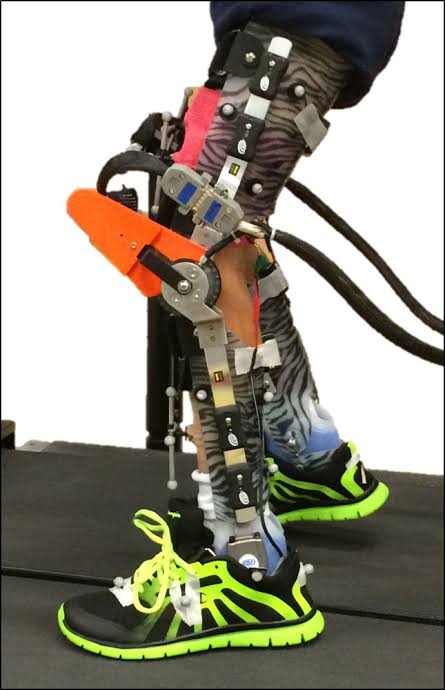
Bio robotics is companion to the prosthetics surgery. In the present time bio robotics has emerged as a hope for the people who have lost their limbs. The combination of biology, genetic and mechanical engineering, has initiated a new revolution for the patients recovering from lost limbs and limited mobility. In present time, researchers are working on exoskeletons (wearable devices mainly for disabled people) to make them more friendly and cost-effective. Scientists at Harvard, the Wyss Institute, and Boston University are working on exoskeletons for stroke patients that run on battery. These practices will surely change the whole medical phenomenon in near time.
In 2019 the next generation surgical robotics market was valued $10.9 million, and it is believed to reach $ 884.5 million in 2030. With a decadal growth rate of 44.6%, the scope and market of Bio-robotics seem highly promising. This growth is highly dependent on the growth of chronic disorders, as well as the permanent disabilities. The developed economies are investing in this area maintaining their favourable reimbursement policies. The surgical robotics projects are now focused on low cost production and more investment prospects. However, there are obstacles too in formulating surgical robotics. Still we are facing a shortage of skilled professionals, and some loopholes in the regulatory systems.
Even though, the research work done by various corporations is impressive and spontaneous. They are working to introduce more technologically advanced products in the market, also considering about cost. With new and upgraded devices, the commercialization of bio robotics seems more practical. Within five-year time span, around 25 companies in USA have surfaced in realizing the concept of autonomous surgical robotics.
Presently, surgical robotics is limited to the developed economies and the reason of funding is obvious. In near future it is believed that the medical sector will accept this new phenomenon in a wider scale and think beyond the current 3D system for prosthetics solutions. Science Fiction is now realizing its concept and man is working beyond the realm of general concept of surgery, and it is really a hope for disabled people to be part of the society as assets.
 In a Herd of Ideas